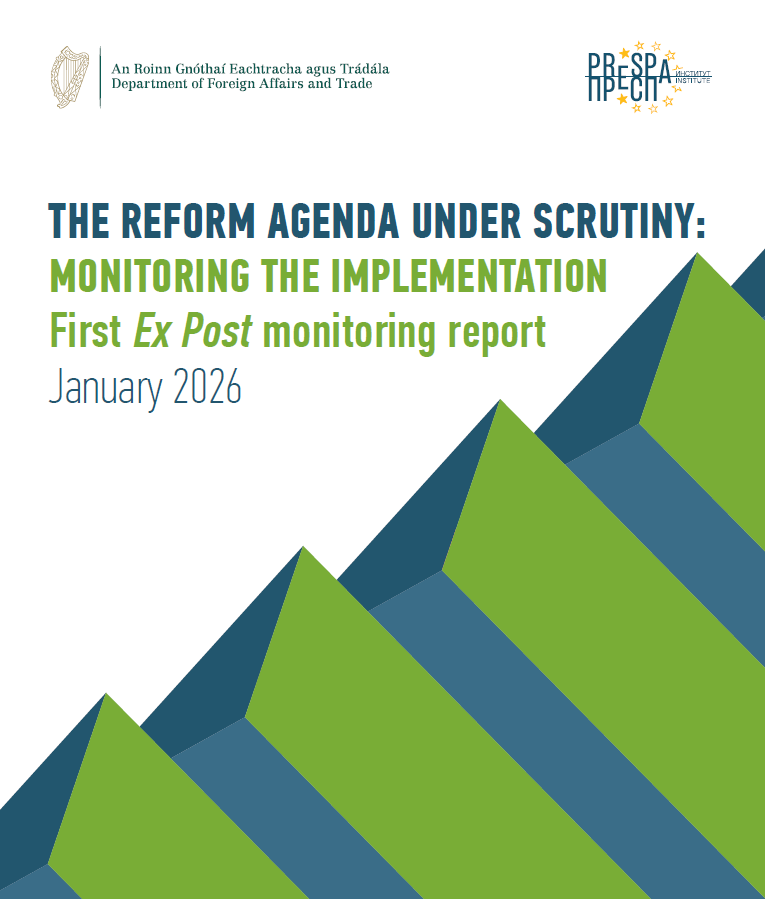
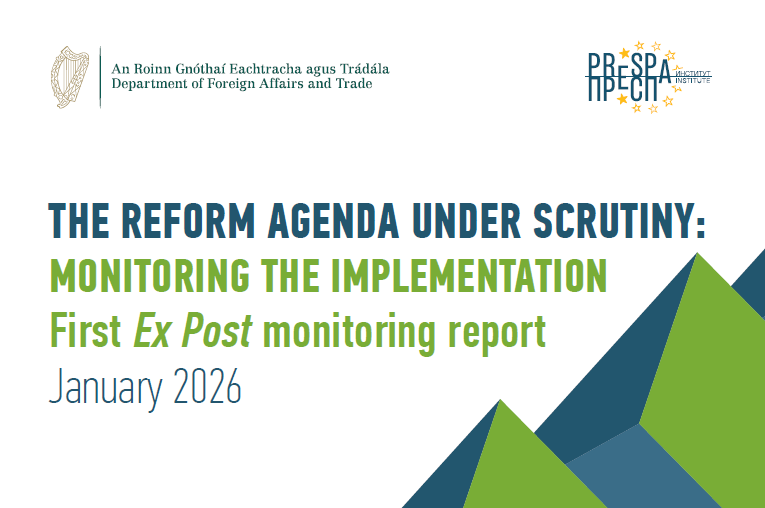
The Reform Agenda 2024–2027 has been the subject of detailed monitoring and analysis through two consecutive reports by the Prespa Institute, in cooperation with the Institute for Good Governance and Policies in Environment and Climate Change (IPECC), as part of the Civic Alliance for Reforms and Growth – CARGrow, which contributed to the development of the publications “Reform Agenda Under the Lens: First Ex-ante Policy Brief” (December 2025) and “Reform Agenda Under the Lens: First Ex-post Monitoring Report” (January 2026).
The “First Ex-ante Policy Brief” (December 2025) provides a systematic overview and analysis of the reform steps outlined in the Reform Agenda 2024–2027 of the Government of North Macedonia, with a particular focus on measures with deadlines by December 2025 and their connection to disbursements under the European Union Growth Plan. The report identifies key institutional responsibilities, potential delays, and areas where enhanced inter-institutional coordination is needed.
The “First Ex-post Monitoring Report” (January 2026) evaluates the actual implementation of the measures, the level of fulfillment of obligations, and the challenges in institutional coordination. The report highlights significant progress in implementation while identifying areas requiring further attention. Mechanisms for monitoring and transparency are partly functional, with recommendations for timely corrective actions. The document provides concrete recommendations to improve efficiency, accountability, and sustainability of the reform process.
The combined results of the ex-ante and ex-post analyses provide a comprehensive overview of the reform cycle, from planning and identifying potential risks to evaluating actual progress. Sharing these reports gives the public and institutions an informed and objective picture of reform implementation, strengthens transparency, and contributes to improving the quality of reform processes in North Macedonia.
IPECC remains committed to supporting evidence-based policies, good governance, and transparent monitoring by sharing relevant analyses and recommendations with the public and institutions.
Read the reports: